Multi-Channel China Marketing Part 1 – See the wood through the trees.
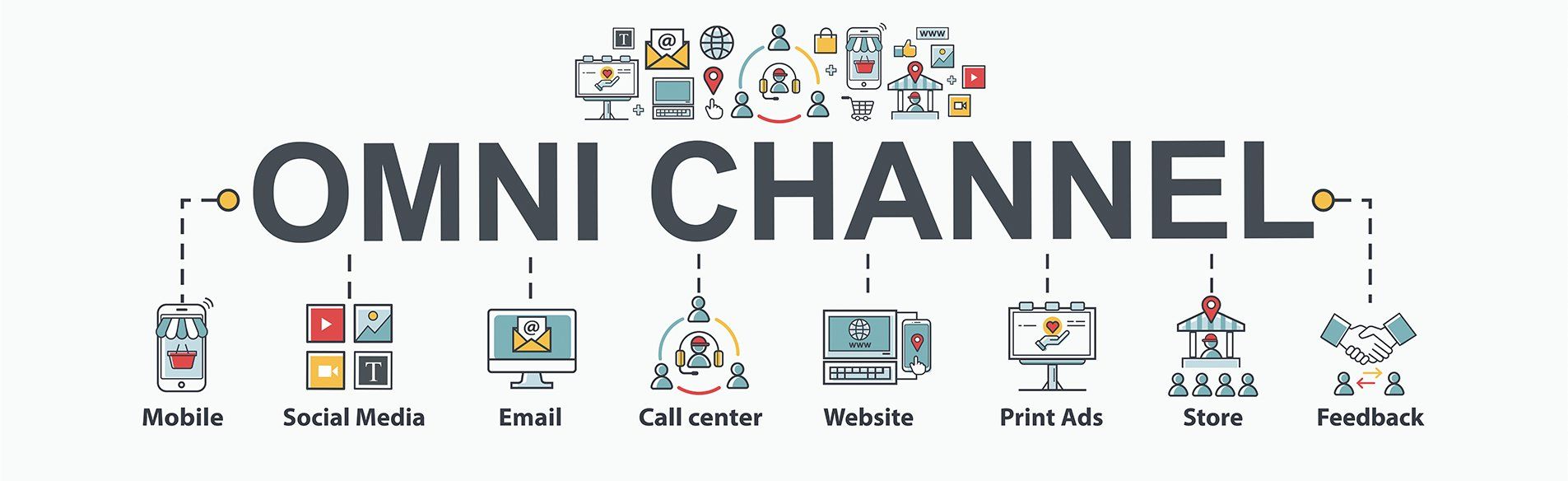
How can an international brand take advantage of a multi-channel marketing strategy in China and set itself up for success?

Multi-channel marketing means the same thing for China as it does everywhere else in the world. It’s not a particularly new concept. But like all things China marketing, China’s retail environment, digital ecosystem, consumer/customer behavior, and not least the rules and regulations that cover data, messaging, and channel restrictions, all combine to make this place a truly unique business environment for international brands, be they B2B or B2C.

Multi-channel marketing simply means marketers taking advantage of all the channels they have available to interact with potential buyers, both direct and indirect, digital, and traditional, online and offline. Jack Ma took the concept a step further when he famously presented his idea for “new retail” in 2016, which led to marketing strategists coining the phrase “omni-channel”. This is essentially the same concept. Omni-channel simply suggests an online/offline consumer experience that is seamlessly integrated via digital technology. Think of the Hema Fresh retail concept. Shoppers can browse in store and purchase online, or vice versa should they wish. You can even have your items cooked in store and dine there and then or take it to go.

It is absolutely true that international brands have access to a broad set of marketing channels at their disposal when it comes to China marketing. However, just because you have them doesn’t mean you have to use them.


China is not cheap. A successful campaign requires commitment. A commitment in terms of both resources and time, and the most successful brands can identify which will be the most effective channels to prioritize and into which they should invest those resources. Unless you are Apple, Nike, Alibaba, or the like, your brand is unlikely to be able to maximize the impact, and therefore the opportunity, of every single one.


This then goes back to the importance of China market insight research. A vital step in any successful marketing strategy yet one that so many international brands, of all shapes and sizes, neglect to take, and then wonder why their marketing campaigns aren’t hitting as expected and their China growth has stalled.


We’ve broken down what a successful China market insight research project looks like in recent videos and blogs, and whichever channel you are looking at, you can see the value that it brings.


If your strategy is based on China social media channels, how do you know you are reaching your target audience via the right platform, in the right way, at the right time? If you can’t answer these questions, why plow all your money and time into a Douyin or Weibo activation if all your consumers’ purchasing decisions are based on WeChat content?


If you are setting your stall out behind a KOL-centric strategy, which can be an expensive enterprise, are you sure that you are choosing the right KOLs to work with? Big isn’t always better when it comes to profile and total audience reach for your return on investment.


Multi-channel marketing is an extremely powerful set of tools for international marketers looking to make their brand successful in China, but you have to know which is the best tool and when it’s the right time to use it.


In future blogs and videos, we will be continuing to look at multi-channel marketing in China and will pick apart each aspect of it in more detail. For now, though, the key takeaway here is to put your brand in a position to identify which are the right channels for your business before you start investing time and money in costly China marketing activities that aren’t necessarily the best route to success.



Seated professional in a dark blazer and white shirt against a gray studio backdrop
By Steven Proud • October 12, 2026
Chris Pereira joins The Radical Global Marketing Podcast to explore how trust, localization and branding are shaping the next era of Chinese global expansion.
Smiling man in a colorful plaid shirt on a white background
By Steven Proud • September 7, 2026
In this episode... Steven and Casey discuss: Why genuine connection can be more powerful than transactional B2B marketing How podcasts can build brand, create demand and strengthen customer relationships Why marketing technology and automation should never replace understanding your customer How AI is increasing content noise – and making human connection even more valuable Why global marketers need to keep challenging what they think they know about their customers Do you really know your customer? Technology gives marketers more opportunities than ever to automate, measure and optimise what they do. Casey experienced that transformation first-hand through marketing automation, gaining the ability to demonstrate how marketing activity contributed to leads, customers and revenue. But more technology doesn't automatically mean better marketing. Casey found that many companies were using only a fraction of the capabilities of the technology they had purchased. Worse, marketers could become so focused on platforms, features and automation that they lost sight of the person they were actually trying to reach. The same problem applies to content. Whether a 17-page report has been painstakingly written by an expensive expert or generated in seconds using AI, the fundamental question remains the same: What question does this answer for your buyer? From go to market to connect to market This becomes particularly important for global marketers. Pain and intent may be universal, but the people experiencing them – and the way they choose to solve their problems – can be very different across markets, cultures and generations. A buyer persona created ten years ago may bear little resemblance to the person making the same purchasing decision today. And a persona developed for one market can't simply be assumed to work everywhere else. Casey's answer is deceptively simple: keep talking to people. For him, this is another reason podcasting has become such a powerful marketing tool. It creates a consistent reason for marketers and business leaders to have meaningful conversations with the people they want to understand. It also sits behind his latest concept, Connect to Market . Rather than simply taking a product to a market, Casey argues that businesses should think more deliberately about how they connect with the people within it – through podcasts, communities, partnerships and other human-first approaches. As AI makes it easier to create more content, more quickly, those genuine human connections may become more important rather than less. Because amid all the automation, algorithms and AI-generated noise, great marketing still begins with understanding another person. Resources mentioned in this episode: Casey Cheshire on LinkedIn Ringmaster Ringmaster on LinkedIn Marketing Automation Unleashed The Hard Corps Marketing Show Sponsor for this episode... This episode is brought to you by Brandigo China . We are an independent marketing and communications agency based in Shanghai, China with 20 years of on-the-ground experience in China. At Brandigo China , we work with multinational clients to support their marketing and business growth efforts in China. We are experts in insight strategy, content marketing, marketing-led business growth campaigns and all things China-based marketing. Go to Brandigo China to learn more and contact us with questions at [email protected] .
Man standing outdoors beside a wooden post, wearing a dark patterned shirt with a slight smile.
By Steven Proud • August 17, 2026
Marc Rust of Consequently Creative joins the Radical Global Marketing Podcast to explore brand-led growth, business transformation, creativity and AI.