Account Based Marketing in China


Account Based Marketing in China


Account Based Marketing (ABM) has been one of the key sales and marketing tactics for B2B businesses for the last few years. It’s nothing new but it does have a fancy name now: basically targeting large accounts with personalized marketing. What’s different now are the tools now available to marketers, which allow us to fully realize key aspects of ABM: personalization, automation, leading to increased efficiency and increased sales.


What is ABM?


ABM is a strategic approach that marketers use to focus on defined clients – prospective accounts – through identification, engagement and nurturing. The ABM approach is the opposite of lead generation – the normal sales funnel is inverted so that instead of trying to develop as many leads as possible, we are just focusing on “named” leads – large, prospectively wonderful clients.
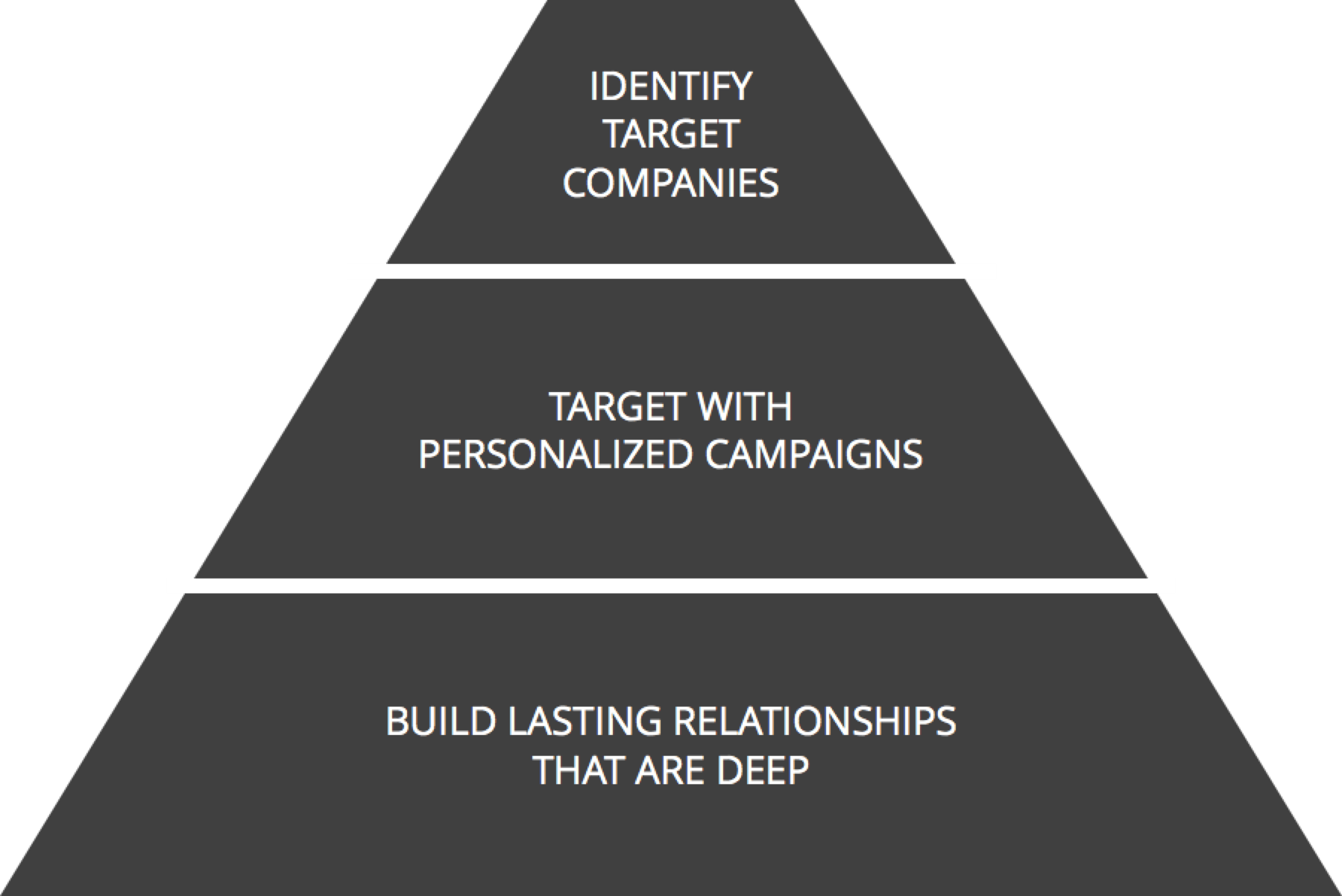


Define your goals


Like any marketing and sales program, it is vital that the goals are clearly defined. This includes:


  • A well-defined strategy that includes clear communication between sales, marketing and customer support
  • Content marketing plan personalized for each client segment
  • Technology to support the efforts – a robust CRM and marketing automation system
  • Sources of leads
  • A program to follow up and adjust your efforts


Account Planning


A crucial element of account planning is setting up and customizing your CRM system as well as your marketing automation. This includes inputting all of the target account tiers into the CRM, automating content for each target customer, building workflows that are customized for each client, and setting up a full loop to ensure that sales and marketing are on the same page.


Content Strategy


Planning your content around the buyer’s journey is how modern marketers are successful – through the simplified stages of awareness, consideration, decision and loyalty. In China the trick is to ensure that the content formats and channels make sense – how to use WeChat instead of email? Getting away from your website as the main channel and making sure that your formats and channels are up-to-date with the quickly changing market.New Paragraph
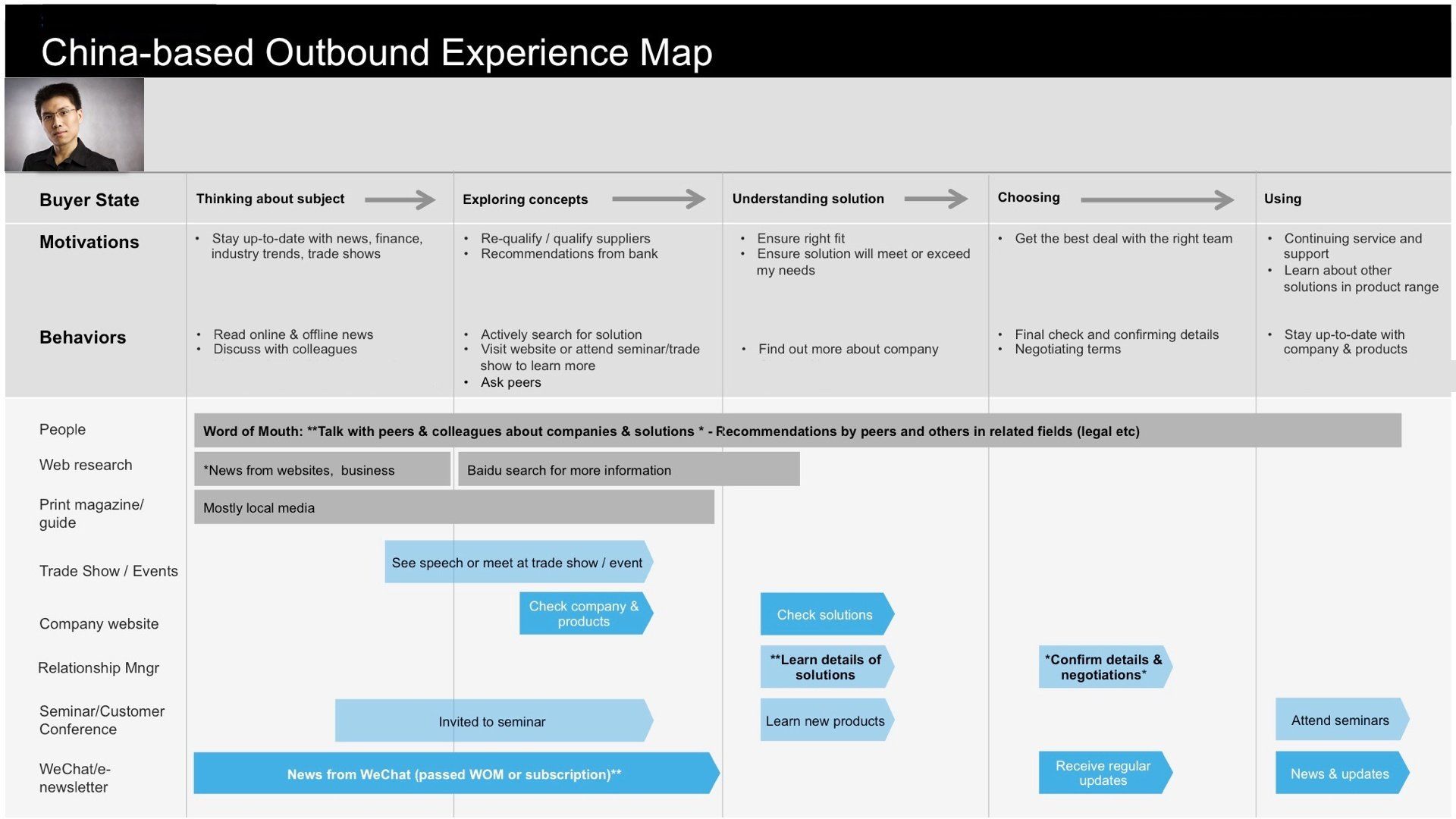


Combining WeChat with ABM


In the West, ABM systems fit wonderfully into marketing automation systems. In China, of course, WeChat proves to be a wonderful complication. As a basic element WeChat does not do enough. What we can do, however, is add technical elements into WeChat to make it fully functional – this means incorporating a CRM system into your WeChat account. On top of that you can add marketing automation elements into the system – so when your target client joins your WeChat account, you can feed them specific content personalized just for them. Add in chatbot functionality and now your WeChat is a supercharged channel.


Sales enablement tools and ABM


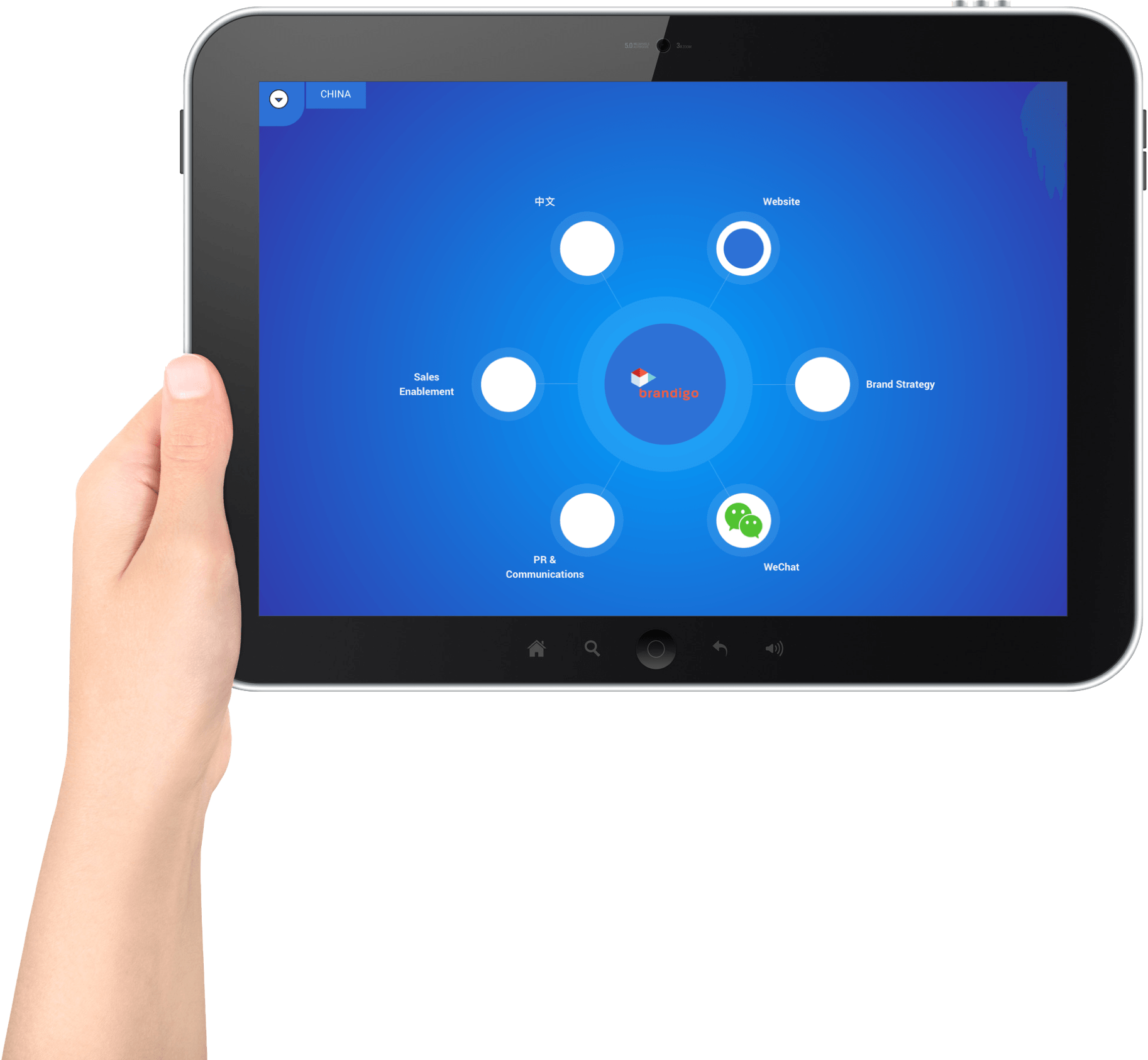
Sales enablement is another piece of the puzzle. When your sales team meets the client, are they rooting through their computer, trying to find a video or presentation deck, buried in their files? Or do they have a fully organized system and tools to pull up the right content, personalized for the meeting? Showpad is a tool that unifies marketing and sales so that the efforts of a proper ABM program are fulfilled by the sales team when they actually meet the client. Brandigo has also worked with some of our B2B clients on smart China marketing campaigns that utilize WeChat as an effective sales enablement tool as well.New Paragraph

ABM is a wonderful approach, and it is possible in China – but the tools and channels have to be adjusted to be effective here. Looking to up your marketing and sales strategy in China? Talk to the experts at Brandigo.


Effective china B2B marketing


If you want more great insight into how to make your China marketing strategy more effective, download our free e-Book, The CMO's Guide to China Marketing: 10 Top Tips for Your International Brand


China B2B marketing horse
By Michael Golden March 5, 2026
Compared with mature markets, marketing in China seems to consist of a prism of shifting goalposts and rules. In fact, no one can seem to agree on the size of the field or even what the goals should look like. Add in B2B as a general industry descriptor and it’s even worse: many of the players seemingly just took to the field, and everyone seems to be out of position or wearing some kind of homemade uniform. Sometimes I feel like an old school referee, blowing my whistle at outrageous fouls, mostly in vain. Now that we’re all stuck in my sports metaphor, I’m forced to pull in the dreaded Word of the Year 2021: the marketing playbook. What does it look like in 2026 for B2B marketers who are ready to up their game and bring some real talent to the pitch? Let me start with what’s not working anymore. That old approach of building massive contact lists and carpet-bombing them with messages? It’s dead. Worse than dead – it’s actively damaging your brand. I’ve watched companies spend six months scraping contacts only to see their email domains get blacklisted and their WeChat accounts flagged within weeks. The Chinese market has moved on, and if you’re still thinking in terms of volume, you’re already behind. What replaced it is something the industry folks are calling “high-velocity trust.” Fewer leads, but the ones you get are already halfway to buying because they’ve done their homework and decided you might be worth their time. Chinese business buyers have become very good at filtering out noise. The Video Reality Check Here’s where most international companies get it wrong. They hear “video content works in China” and immediately produce slick corporate videos. Then they wonder why nobody watches past the first fifteen seconds. Corporate videos have their place, but there’s a new shift in video. What actually works is something borrowed from consumer marketing called Zhong Cao – “grass planting.” It means planting seeds of interest through authentic content instead of trying to close deals through videos. For example: an engineer explaining how a solution solves a specific problem, or a consultant walking through a real case study. One client had their technical lead create simple WeChat Channels videos explaining industry misconceptions. No production crew, no script. Within three months their qualified lead flow increased by 40 percent. The platforms that matter most right now are: WeChat Channels Douyin Xiaohongshu (Rednote) The Data Privacy Wake-Up Call If you’re still buying contact lists or scraping data, stop. China’s Personal Information Protection Law is now being enforced and creates real legal risk. The better approach is “earn it, don’t take it.” Create valuable assets that prospects want: Diagnostic tools ROI calculators Self‑assessment tools Expert webinars When done right, leads arrive already educated and ready for real conversations. WeChat: Not What You Think It Is Many international companies treat WeChat like LinkedIn. That’s wrong. WeChat is the operating system for Chinese business relationships. Successful companies build integrated systems: Official Accounts for credibility Private connections for relationship building Mini‑Programs for lead capture connected to CRM When marketing and sales operate inside the same WeChat ecosystem, leads stop falling through the cracks. The AI Search Complexity Baidu still matters, but AI platforms are now shaping how buyers discover vendors. Companies must appear across a broader “trust ecosystem” including media outlets, Zhihu, and industry portals. Strategic PR is becoming critical again. Media articles and expert interviews: Improve search visibility Provide shareable sales content Build credibility The Real Talk Conclusion B2B marketing in China feels chaotic because it is. But underneath the chaos there is a clear shift: From interruption → education From volume → value From control → trust Companies that build authority before demanding attention are winning. The payoff is higher‑quality leads, shorter sales cycles, and stronger long‑term relationships. Key Takeaways What is high-velocity trust in B2B marketing? High-velocity trust is a lead generation strategy where companies focus on building authority and educating buyers so that prospects arrive already informed and closer to purchase. Why does traditional B2B outreach fail in China? Traditional outreach fails because Chinese buyers filter marketing noise aggressively, and privacy laws such as China’s Personal Information Protection Law make mass scraping risky. Which platforms matter most for B2B discovery in China? WeChat Channels Douyin Xiaohongshu (Rednote) What role does WeChat play in B2B marketing? WeChat acts as the operating system of Chinese business relationships where discovery, communication, and deal discussions often take place. Why is PR becoming important again in B2B marketing? Industry media, expert interviews, and trade publications provide trust signals that influence AI search and vendor discovery. This article originally appeared in the China 2026 B2B Trends Report, available for download here .
horse illustration over a city backdrop,
By Michael Golden February 9, 2026
The China 2026 B2B Trends Report covers all of the latest B2B Marketing strategies and tactics in China.
Woman with blonde hair, smiling, wearing a light blue top, resting her chin on her hand, against a gray background.
By Steven Proud January 23, 2026
Podcast on China marketing featuring Harriet Gaywood