Creating Effective Brand Loyalty in China

Chinese consumers, especially in Tier 1 and 2 cities, are educated when it comes to brands. International companies can no longer rely on their country of origin doing their marketing for them and the competition from local brands gets increasingly stiffer all the time. Generating brand loyalty becomes an ongoing challenge and the solution has to be based on quality and service.

The past two decades have seen an explosion in the choices available to people in China. The country has opened up to the world and become an economic powerhouse, meaning everybody wants a slice of this particular pie. And because things move so fast here, with new channels opening up to marketers all the time, it’s difficult for brands to create the assets they need to keep themselves memorable amongst their target market.

So whether it’s Scandinavian paper pulp board sold by the ton or fancy South American coffee sold by the cup, in first tier cities especially, the options are manifold.  

But has this led to as much bed hopping between brands as the research seems to suggest, and what is being done to keep hold of customers and consumers when they choose a brand?

Well quite a lot, it seems. And as always in China, digital tools, particularly platforms like WeChat, are at the forefront.


B2B – isn’t it all about the balance sheet?

The BrandigoChina old guard can tell many a tale of ‘negotiations’ with purchasing managers in Chinese companies. We can bemoan that these folks know the cost of everything and the value of nothing, but getting costs down is the job of procurement departments the world over. They think with their heads, not their hearts.

In the ‘bad’ old days, some old fashioned guanxi would grease the wheels. Taking the manager out for a lavish meal or showering him or her with gifts was a good place to start. That sort of business practice has now, thankfully, long become a thing of the past.

Customer service and aftercare are vital in China, and using digital tools, it is easier to maintain this relationship. For example, you can send surveys asking for feedback, incentivizing people with a chance to win in a lucky draw. Hosting exclusive events for existing customers is another great way to meet them in person and develop a personal relationship. Sending personalized emails or WeChat messages with quality, relevant content, is another option for making that customer feel valued – and keeping your brand front of mind.


  B2C – This time it’s personal

Chinese consumers are savvier then ever, and millennials in particular will no longer accept shoddy customer service or companies that shrug their shoulders and say its Hobson’s choice for the customer. Clever brands not only treat their customers well, they turn them into evangelists.  

In the highly competitive F&B space for instance, international and local brands alike are doing some excellent work to foster and maintain brand loyalty as part of their China marketing strategies. A great example is Wagas, an international casual dining/cafe chain. The brand has built up a loyal following with a reputation for high-quality and excellent service, an identity that taps into the Chinese passion and trend for healthy modern living, and a loyalty program that customers find genuinely rewarding. 

The company has used WeChat and an innovative mini-programme that empowers loyal customers to manage their own reward points and earn member-only coupons which they can redeem at Wagas or Baker & Spice venues around China.
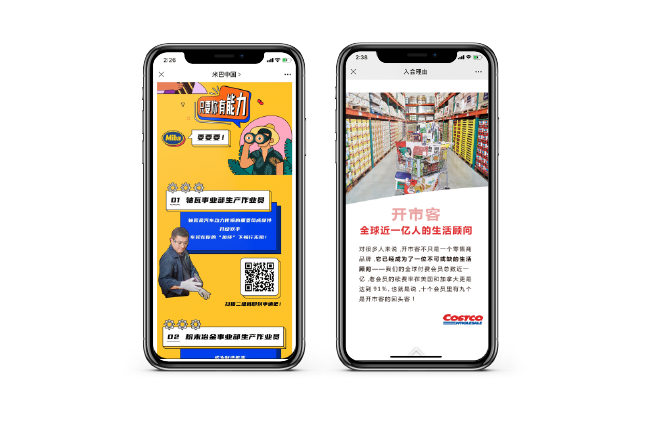
Technology is opening up the options companies have to convert sales into brand advocates. Clever brands are embracing this, leveraging on the mobile phone, the tool most people have on their person throughout their waking hours, to market to them in a direct, personal and useful way, helping them solve their problems or making using the product a fun and engaging experience. B2B and B2C brands can take advantage of these omnipresent devices to deliver engaging content and brand experiences right into the hands of their customers that will foster brand loyalty. 

If you want to find out more about how to make your China marketing strategy more effective, or to bring your brand up to speed on the latest China digital marketing tactics, you can download our latest ebook, The CMO’s Guide to China Marketing: 10 Top Tips for Your International Brand. Just click on the image below.


China B2B marketing horse
By Michael Golden March 5, 2026
Compared with mature markets, marketing in China seems to consist of a prism of shifting goalposts and rules. In fact, no one can seem to agree on the size of the field or even what the goals should look like. Add in B2B as a general industry descriptor and it’s even worse: many of the players seemingly just took to the field, and everyone seems to be out of position or wearing some kind of homemade uniform. Sometimes I feel like an old school referee, blowing my whistle at outrageous fouls, mostly in vain. Now that we’re all stuck in my sports metaphor, I’m forced to pull in the dreaded Word of the Year 2021: the marketing playbook. What does it look like in 2026 for B2B marketers who are ready to up their game and bring some real talent to the pitch? Let me start with what’s not working anymore. That old approach of building massive contact lists and carpet-bombing them with messages? It’s dead. Worse than dead – it’s actively damaging your brand. I’ve watched companies spend six months scraping contacts only to see their email domains get blacklisted and their WeChat accounts flagged within weeks. The Chinese market has moved on, and if you’re still thinking in terms of volume, you’re already behind. What replaced it is something the industry folks are calling “high-velocity trust.” Fewer leads, but the ones you get are already halfway to buying because they’ve done their homework and decided you might be worth their time. Chinese business buyers have become very good at filtering out noise. The Video Reality Check Here’s where most international companies get it wrong. They hear “video content works in China” and immediately produce slick corporate videos. Then they wonder why nobody watches past the first fifteen seconds. Corporate videos have their place, but there’s a new shift in video. What actually works is something borrowed from consumer marketing called Zhong Cao – “grass planting.” It means planting seeds of interest through authentic content instead of trying to close deals through videos. For example: an engineer explaining how a solution solves a specific problem, or a consultant walking through a real case study. One client had their technical lead create simple WeChat Channels videos explaining industry misconceptions. No production crew, no script. Within three months their qualified lead flow increased by 40 percent. The platforms that matter most right now are: WeChat Channels Douyin Xiaohongshu (Rednote) The Data Privacy Wake-Up Call If you’re still buying contact lists or scraping data, stop. China’s Personal Information Protection Law is now being enforced and creates real legal risk. The better approach is “earn it, don’t take it.” Create valuable assets that prospects want: Diagnostic tools ROI calculators Self‑assessment tools Expert webinars When done right, leads arrive already educated and ready for real conversations. WeChat: Not What You Think It Is Many international companies treat WeChat like LinkedIn. That’s wrong. WeChat is the operating system for Chinese business relationships. Successful companies build integrated systems: Official Accounts for credibility Private connections for relationship building Mini‑Programs for lead capture connected to CRM When marketing and sales operate inside the same WeChat ecosystem, leads stop falling through the cracks. The AI Search Complexity Baidu still matters, but AI platforms are now shaping how buyers discover vendors. Companies must appear across a broader “trust ecosystem” including media outlets, Zhihu, and industry portals. Strategic PR is becoming critical again. Media articles and expert interviews: Improve search visibility Provide shareable sales content Build credibility The Real Talk Conclusion B2B marketing in China feels chaotic because it is. But underneath the chaos there is a clear shift: From interruption → education From volume → value From control → trust Companies that build authority before demanding attention are winning. The payoff is higher‑quality leads, shorter sales cycles, and stronger long‑term relationships. Key Takeaways What is high-velocity trust in B2B marketing? High-velocity trust is a lead generation strategy where companies focus on building authority and educating buyers so that prospects arrive already informed and closer to purchase. Why does traditional B2B outreach fail in China? Traditional outreach fails because Chinese buyers filter marketing noise aggressively, and privacy laws such as China’s Personal Information Protection Law make mass scraping risky. Which platforms matter most for B2B discovery in China? WeChat Channels Douyin Xiaohongshu (Rednote) What role does WeChat play in B2B marketing? WeChat acts as the operating system of Chinese business relationships where discovery, communication, and deal discussions often take place. Why is PR becoming important again in B2B marketing? Industry media, expert interviews, and trade publications provide trust signals that influence AI search and vendor discovery. This article originally appeared in the China 2026 B2B Trends Report, available for download here .
horse illustration over a city backdrop,
By Michael Golden February 9, 2026
The China 2026 B2B Trends Report covers all of the latest B2B Marketing strategies and tactics in China.
Woman with blonde hair, smiling, wearing a light blue top, resting her chin on her hand, against a gray background.
By Steven Proud January 23, 2026
Podcast on China marketing featuring Harriet Gaywood