B2B Marketing in China Is Getting Wildly Complicated
Quick Summary
- China B2B marketing is becoming increasingly fragmented across AI search, social platforms, private traffic ecosystems, and community-driven discovery.
- The shift from SEO to GEO (Generative Engine Optimization) is changing how companies approach visibility, authority, and lead generation in China.
- Buyers are now researching brands through AI summaries, Rednote discussions, Douyin videos, WeChat groups, and trade media before ever visiting a website.
- Trust, human storytelling, and founder-led content are becoming more effective than traditional corporate messaging.
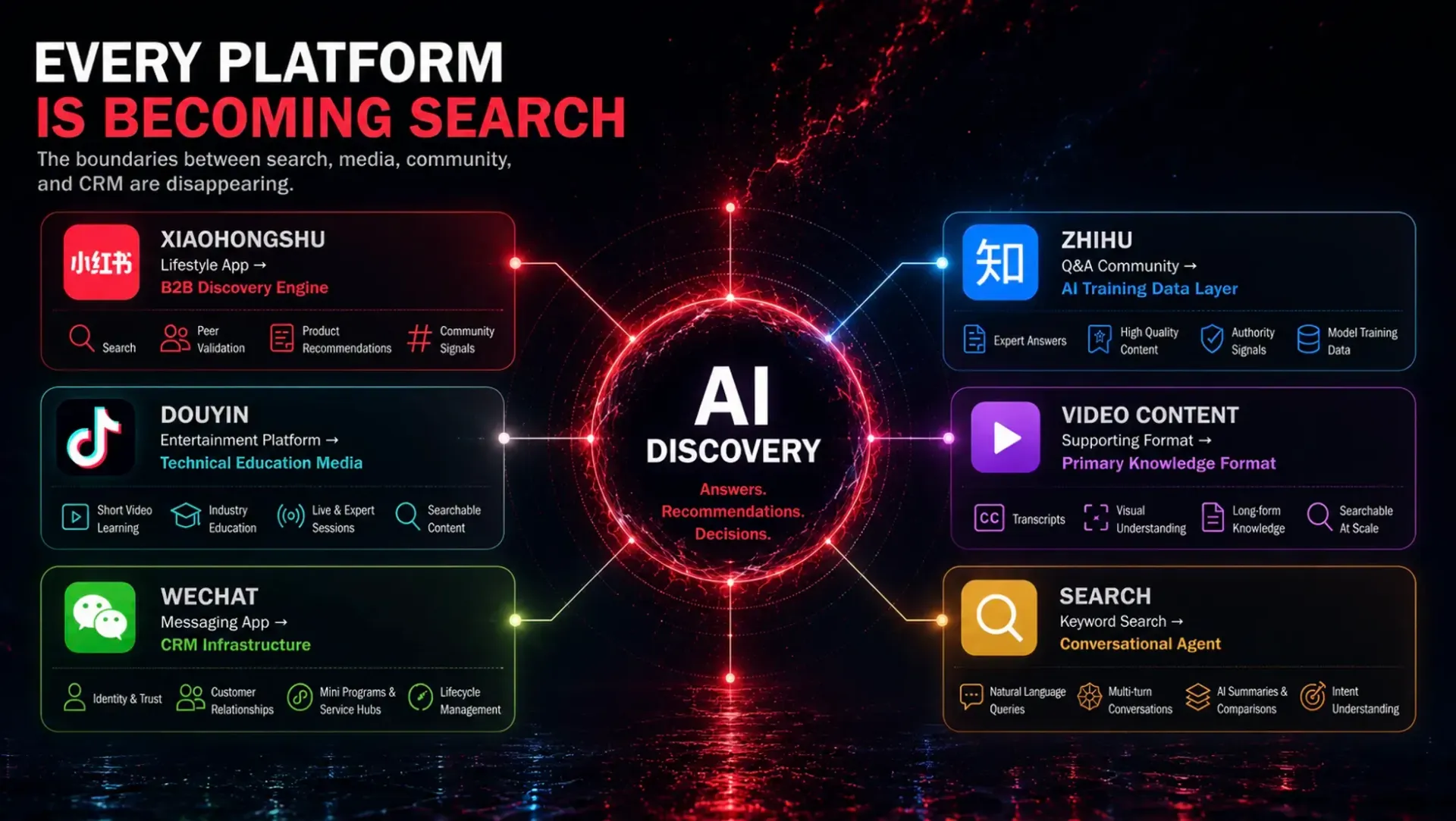
- Platforms such as Douyin, Xiaohongshu, WeChat, Zhihu, and Baidu are increasingly functioning as interconnected search and discovery ecosystems.
- Long-term brand building, ecosystem thinking, and authentic communication are becoming critical competitive advantages for companies operating in China.
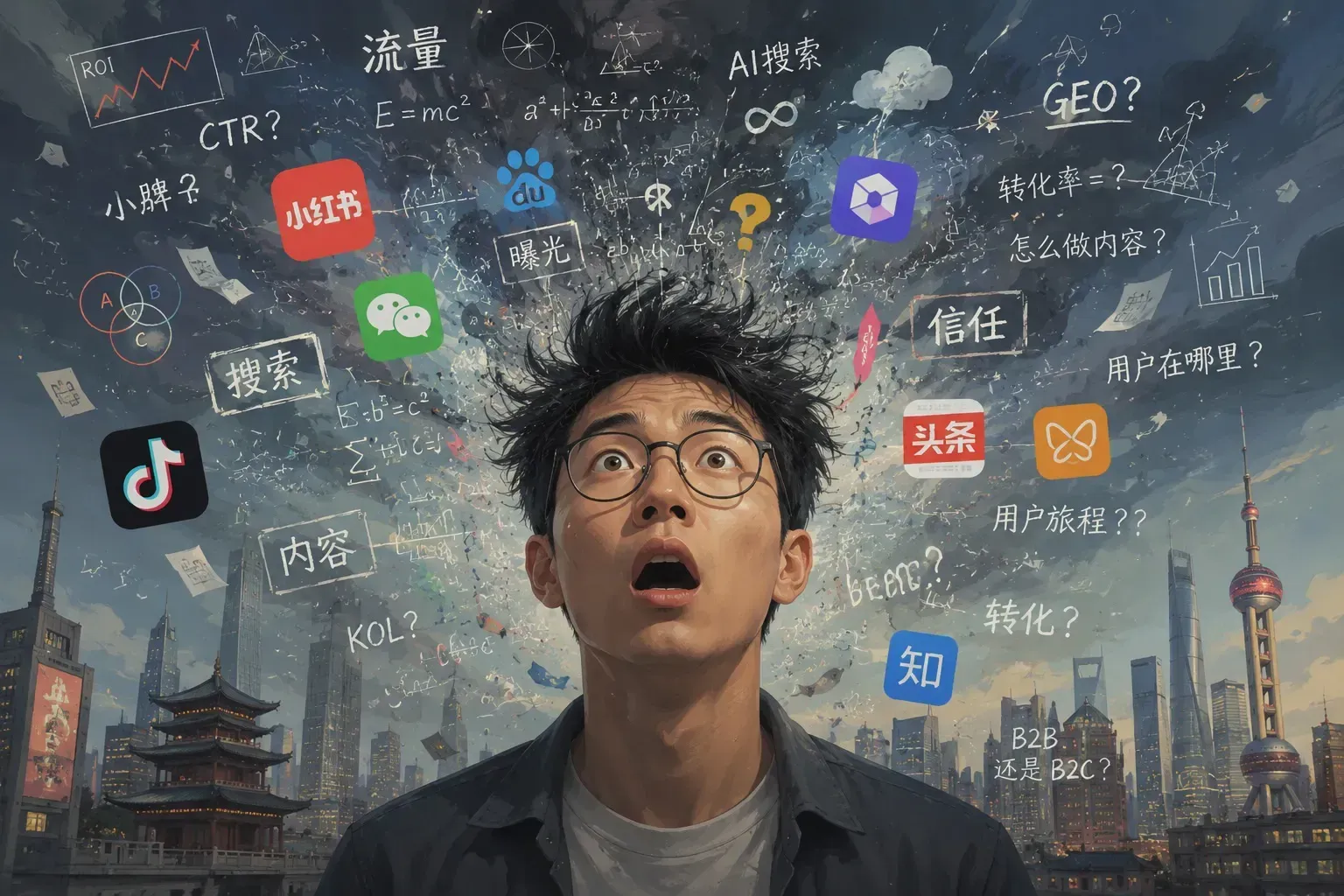
The old “run ads, drive traffic, optimize keywords” playbook for B2B marketing in China is starting to fall apart.
Buyers are researching through AI summaries, WeChat groups, Rednote discussions, founder videos, trade media, and community recommendations before they ever hit your website. Meanwhile every platform is slowly turning into its own search engine, and marketers are now expected to somehow be visible across all of them at once.
That was the core theme I explored recently at BritCham Shanghai and the Irish Chamber of Commerce China’s “B2B Marketing for China — Insider Insights that AI Can’t Teach” event alongside Ben Wood (Deloitte), Harriet Gaywood (Anoumis Communications), and Chan Juu Ann (Out of Ordinary Human).
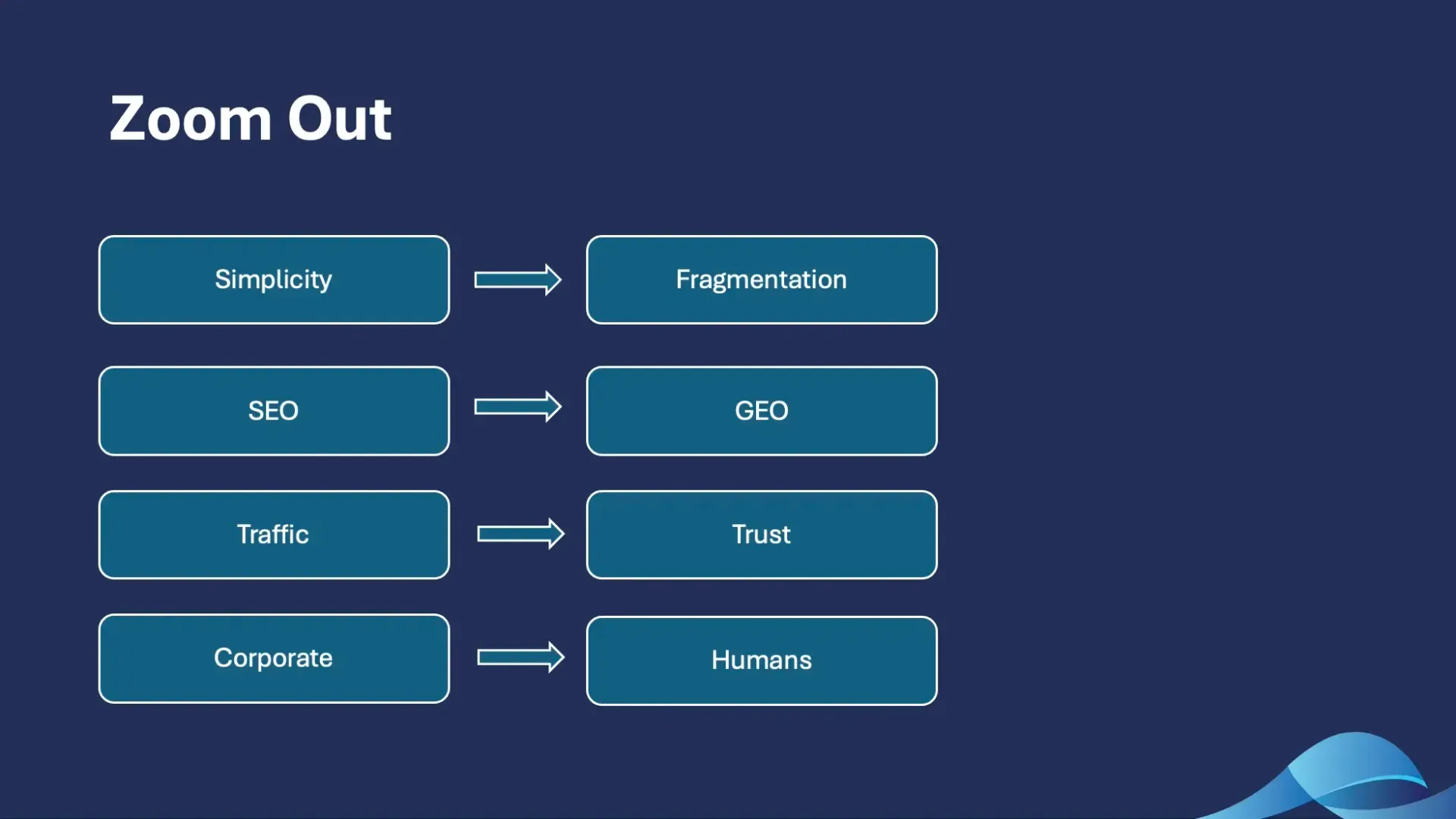
My section focused on what I’m seeing happen right now in China B2B lead generation:
- Simplicity → Fragmentation
- SEO → GEO
- Traffic → Trust
- Corporate → Humans
The GEO part is especially interesting.
SEO was relatively straightforward. Optimize for Google or Baidu, rank for keywords, drive traffic.
Now we’re moving into GEO — Generative Engine Optimization — where brands are competing to become the answer surfaced by AI systems.
And China makes this even more complicated because the AI ecosystem itself is fragmented.
Doubao sits inside ByteDance. Yuanbao belongs to Tencent. ERNIE belongs to Baidu. They all prioritize different sources and ecosystems.
So now visibility isn’t just about having a website anymore.
It’s about being present across:
- Douyin
- Rednote / Xiaohongshu
- trade media
- Zhihu
- community conversations
- AI-search-friendly content
- founder content
- technical explainers
One of the ideas that got the biggest reaction during the session was what I called:
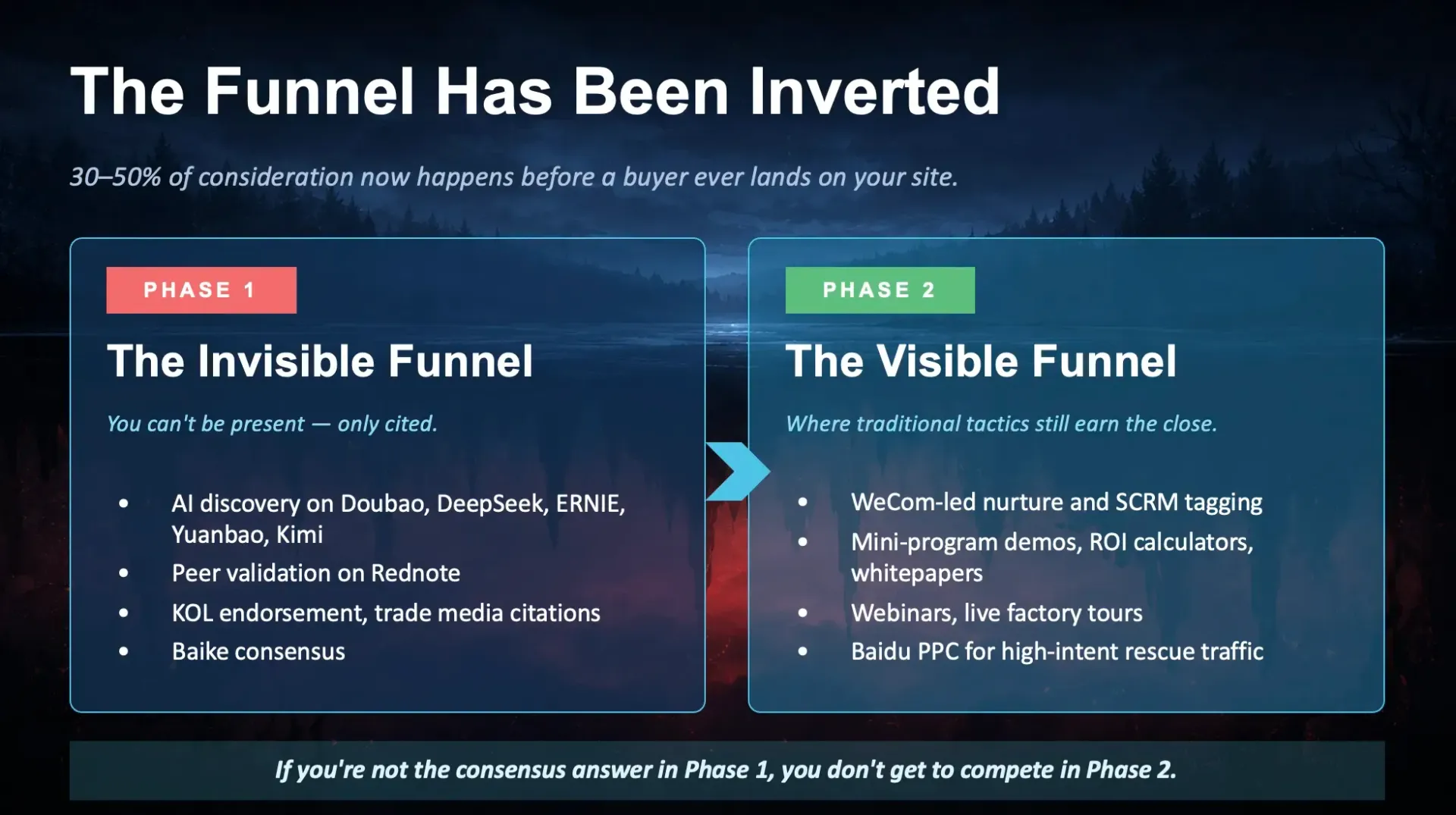
“The Invisible Funnel.”
A huge amount of consideration now happens before someone even lands on your site.
They’ve already:
- asked DeepSeek
- seen your founder on Douyin
- checked Rednote discussions
- seen media mentions
- heard your name in a WeChat group
- compared vendors through AI summaries
By the time they arrive at your website, they’re already halfway through the buying process.
That changes how we think about discovery, trust, PR, and even content itself.
It also explains why founder IP and technical creators are suddenly exploding in China B2B.
Some of the strongest-performing content right now is:
- factory walkthroughs
- engineer explainers
- behind-the-scenes operations
- technical demos
- founder livestreams
People trust humans more than logos.
One line that seemed to resonate with the room:
“Traffic is abundant. Trust is scarce.”
Thanks again to BritCham Shanghai, the Irish Chamber of Commerce China, all the speakers, and everyone who joined the discussion.
China B2B marketing is getting messier, faster, more fragmented — and honestly way more interesting.
Frequently Asked Questions
What is GEO (Generative Engine Optimization)?
GEO refers to optimizing your brand and content for AI-driven search and discovery platforms such as DeepSeek, Doubao, Kimi, Yuanbao, ERNIE, ChatGPT, and AI-enhanced search experiences.
How is GEO different from traditional SEO?
SEO focused on ranking web pages through keywords and backlinks. GEO focuses on becoming a trusted, cited, and machine-readable source across AI ecosystems, media, communities, and platforms.
Why is B2B marketing in China becoming more complicated?
China’s digital ecosystem is highly fragmented across Tencent, ByteDance, Baidu, Alibaba, and emerging AI platforms. Buyers now discover brands through multiple ecosystems simultaneously rather than through a single search engine journey.
Why are platforms like Xiaohongshu and Douyin becoming important for B2B?
Buyers increasingly use these platforms for peer validation, industry research, founder insights, technical demonstrations, and behind-the-scenes content before engaging with vendors directly.
What is the “Invisible Funnel”?
The Invisible Funnel refers to the research and consideration phase happening before a buyer visits your website — through AI summaries, social discussions, media mentions, community recommendations, and platform discovery.
Is PR becoming important again in China B2B?
Yes. Trade media coverage, expert citations, conference participation, and third-party validation are becoming increasingly valuable because AI systems often rely on authoritative external sources when surfacing answers.
What is Founder IP and why does it matter?
Founder IP refers to founders, technical experts, or executives becoming visible creators and public voices for their companies. In China, founder-led and expert-led content is increasingly outperforming traditional corporate messaging because audiences trust people more than brands.
Does traditional lead generation still work?
Yes — webinars, trade media partnerships, Baidu PPC, CRM nurturing, and WeCom workflows still play an important role. However, they increasingly sit later in the customer journey after trust and awareness have already been established elsewhere.
What should companies prioritize in 2026?
Companies should focus on:
- building trust across ecosystems
- creating discoverable expert content
- strengthening PR and authority signals
- investing in WeCom/private traffic infrastructure
- making content AI-readable and platform-native
- developing authentic human-led storytelling
Mike Golden
President, Brandigo China
B2B Marketing Strategy | China Market Growth | Digital Lead Generation
Mike Golden is President and co-founder of Brandigo China, a Shanghai-based B2B marketing agency that helps global companies build visibility, credibility, and lead generation in China. With more than 20 years of experience in the Chinese market, Mike works with international brands on content strategy, digital marketing, social media, PR, and demand generation.
Connect with Mike on LinkedIn.