The CMO’s Guide to B2B WeChat Fan Growth in China
As a full-service marketing agency here in China, we’ve produced our fair share of WeChat content – to date I’ve counted tens of thousands of pieces of content ranging across industries. Besides our major consumer client Costco, most of our clients are B2B or B2B2C focused – auto, health supplement ingredients, industrial and chemical clients with complicated value chains.
So how do you grow fans when you are selling the chemical that goes into air cons? Or paper pulp? Or the ingredient that goes into a supplement or fortification? And the complication with WeChat is that prospective followers must proactively follow you – by scanning a QR code or through shared content. This barrier creates a so-called “walled garden.”
The B2B Challenge
Most of the B2B in China articles and pundits miss this focus completely – instead they assume that the company has SOME sort of saleable product, but that it is not consumer-focused. When in reality they have a component or one piece of an extremely long and complex value chain. Arcelor Mittel, the world’s largest steel manufacturer, is not selling homogenized rolls of steel on Alibaba, 1688, or any other B2B marketplace (and if they are, it is just for visible company promotion, not for actual sales).
So the B2B company, whether after China entry, or just realizing that every other company in the industry has an account, creates an official WeChat account to talk directly to industry followers, prospects, distributors, and its own employees. It dutifully recreates serious press releases in WeChat format, perhaps with some styling and design elements added. The corporate communications department usually takes the task, although individual business units, and HR, may create their own official accounts as well. At one point they may hire an agency to do the dirty work – creating and distributing weekly content.
Sales people excitedly share it on their Moments and in their WeChat groups. They send it to their family and friends. The follower numbers jump up. This is going so well!
Three months in. The content starts to lose its pizzaz. The sales team stops sharing it, unless harangued by their boss. The follower and read numbers start to decline. The comms department starts to blame the agency, and the agency complains that the company content is too boring (when they probably don’t really understand it in-depth).
Solving the Problem
So, how do we escape this doom spiral? Here are some of the tips that we have collated through the last several years.
Content: industry know-how and trends
Content that educates and informs in your industry is worth sharing. And sharing is the name of the game. With the general decrease in WeChat article reads, it has to be very compelling or interesting.
Content: using a local touch
Photos and videos of local employees are always shared by the teams, to their friends and families. Honeywell had employees dress up in Chinese period costumes – proving to be an incredibly popular piece of content. News or products that bring benefit to Chinese customers is critical.
Content: amazing and engaging
I know that’s a pretty vague way to state it – but content that looks amazing or has an engagement function always does better. We look to B2C content for hints and ideas – BMW, Starbucks etc have very nice content. The trick is to fit that development into a B2B mindset (and budget). One of our best performers was a hand drawn cartoon poster for Miba, a leading producer of bearings and automotive parts. Interesting stories, told visually, and interviews (video) are also great ways to generate amazing content. Remember to check your headline and key visual – this will be the main reason someone decides to read the story in the first place.
Promotion: Incentivize the front-line to share
If the sales team does not share the content, there is already a problem. Running a contest with your sales team is one way to incentivize them to share widely. It’s also worth asking them what type of content they’d like to see. Finding a balance between the sales teams needs and marketing/global strategy is always tricky, but somewhere along that spectrum is the right tone and subject material for your company.
Promotion: Contests
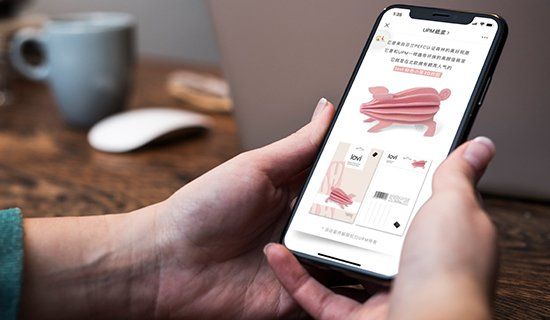
Chinese (well, everyone) loves a good giveaway. Our client UPM, one of the world’s leading paper pulp producers, have given away (the so-called “lucky draw”) Finnish glassware, art pieces and home decorations for answers to questions and polls based on sustainable living. Not expensive, and a fun way to drive engagement. Note that “incentivized sharing” (share this to have a chance to win) is against Tencent’s rules and may lead to your account being banned.
Paid: WeChat advertising
Of course, there are paid advertising options available. Also, previously expensive packages, such as WeChat Moments Advertising, have become more reasonable. Also, you may generate a lot of fans that are not in your target audience. Cheaper options also exist – small banner types of ads at the bottom of articles.
Paid: Content through industry media WeChat or KOL
Using industry media – or Key Opinion Leaders (KOL) in the consumer world – is a good way to promote the brand and campaigns or products. From our experience, to successfully build fan growth this must be combined with one of the other elements, such as a contest.
Offline incentive
Any offline opportunities should be used to drive fan growth. Entering the exhibition space? Require them to scan your QR code and follow you. Running a seminar? Have everyone scan the QR code in your PPT and follow you first. One of the tricks here is to continue to provide worthwhile content to keep them as fans after, or else the drop-off rate will be high.
Incorporate functionality beyond standard WeChat
You can add in additional functionality to your WeChat to attract and retain customers – for example a support document center, a webinar function, or a point-based CRM system. All of these tactics should provide value to your customer or prospects. This is the major growth area for accounts that have “hit the wall” with their content. Understanding the buyer’s journey is critical to making this successful.
Use your existing database / other channels
You can send an email – with QR code embedded (or now, a link to mini program) – and ask your database contacts to follow your account. Also important to make sure your WeChat QR code is visible on your website and other marketing collateral.
If you want to find out more about how to make your China marketing strategy more effective, or to bring your brand up to speed on the latest China digital marketing tactics, you can download our latest ebook, The CMO’s Guide to China Marketing: 10 Top Tips for Your International Brand.